

Unlock the Editor’s Digest for free
Roula Khalaf, Editor of the FT, selects her favourite stories in this weekly newsletter.
British politicians and business leaders sometimes blame a weak work ethic for the UK’s sluggish economic growth. A nation’s stock of grafters and risk-takers can certainly shape its prosperity. But the UK’s problem is less a shortage of these traits and more an economic system that actively discourages people from expressing them.
Take the income tax system. Though the top rate isn’t high by European standards, cliff edges caused by the withdrawal of a tax-free personal allowance, child benefit and subsidised childcare can result in steep marginal tax rates of more than 60 per cent.
Many UK taxpayers respond by working fewer hours or refusing promotions and contracts to lower the burden and retain government support. There is a notable bunching in earners just below the £50,000 and £100,000 salary thresholds where marginal tax rates jump, representing around 400,000 individuals.
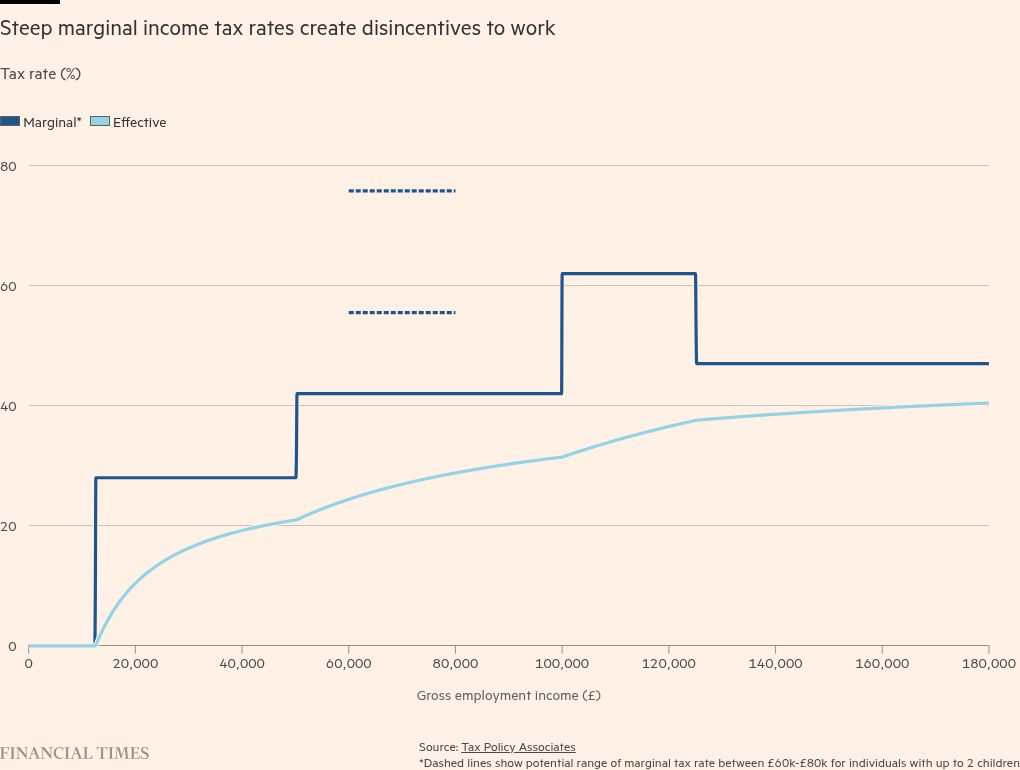
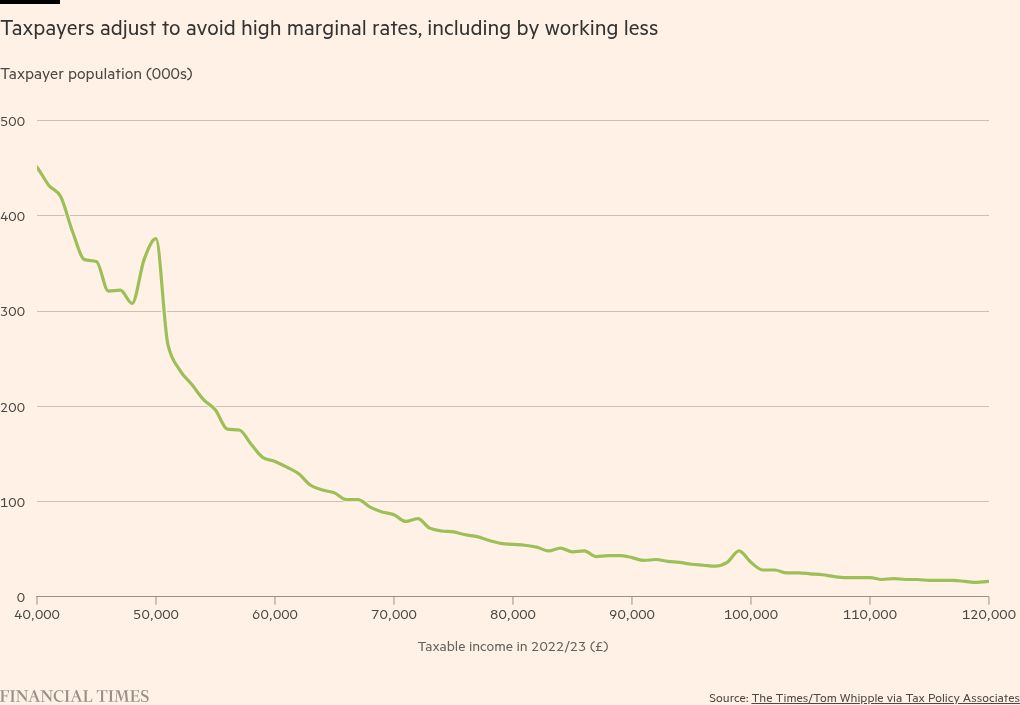
These disincentives are exacerbated by a longstanding freeze on personal tax thresholds, a policy brought in under the Conservative government and since continued by Labour. As a result, the Office for Budget Responsibility estimates that 5.4mn additional people will be pulled into the higher- and additional-rate tax bands by 2030. (For measure, if the punitive £100,000 income threshold had risen in line with inflation, it would instead kick in at around £155,000.)
Another drag comes from the student loan system. Repayments add around 9 percentage points to marginal income tax rates above a specific salary threshold, which was also frozen in the autumn Budget. The repayment schedule is a particular burden for English graduates who started university between 2012 and 2022. Relative to previous cohorts, they paid higher tuition fees and dearer interest rates. Indeed, over two-thirds of the youngest graduates in this group are forecast never to repay their debt in full, so repayments become akin to a career-long tax.
UK companies and entrepreneurs face steep cliff edges in marginal tax rates too, including through the business rate, VAT and corporation tax system. These can discourage growth and expansion.
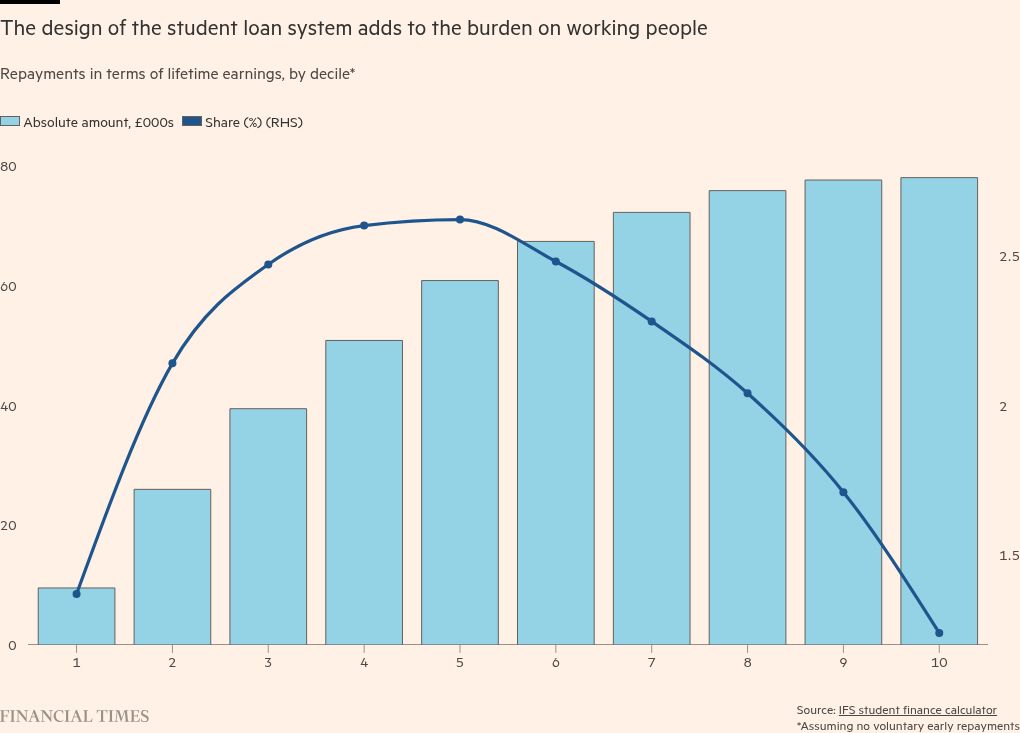
Of course, tax pays for public services and attending university can deliver dividends in future earnings. But the returns look weak.
More than 70 per cent of Britons in a 2024 poll said UK public services fail to meet their expectations. The cost of essentials and infrastructure linked to state policies — including electricity, rail and housing — has surged relative to the average wage over the past two decades. In particular, the UK ranks among the most expensive in the developed world for childcare costs, which helps explain the strong incentive for families to reduce their earnings and hours to retain subsidised child support.
Travel and rapid global growth have also opened Britons’ eyes to living standards elsewhere. (Having hosted and visited Indian relatives since childhood, I’ve shifted from proudly championing the UK’s public services to embarrassingly glossing over them.)
All this adds to the sense of having to run faster to stay in the same place.
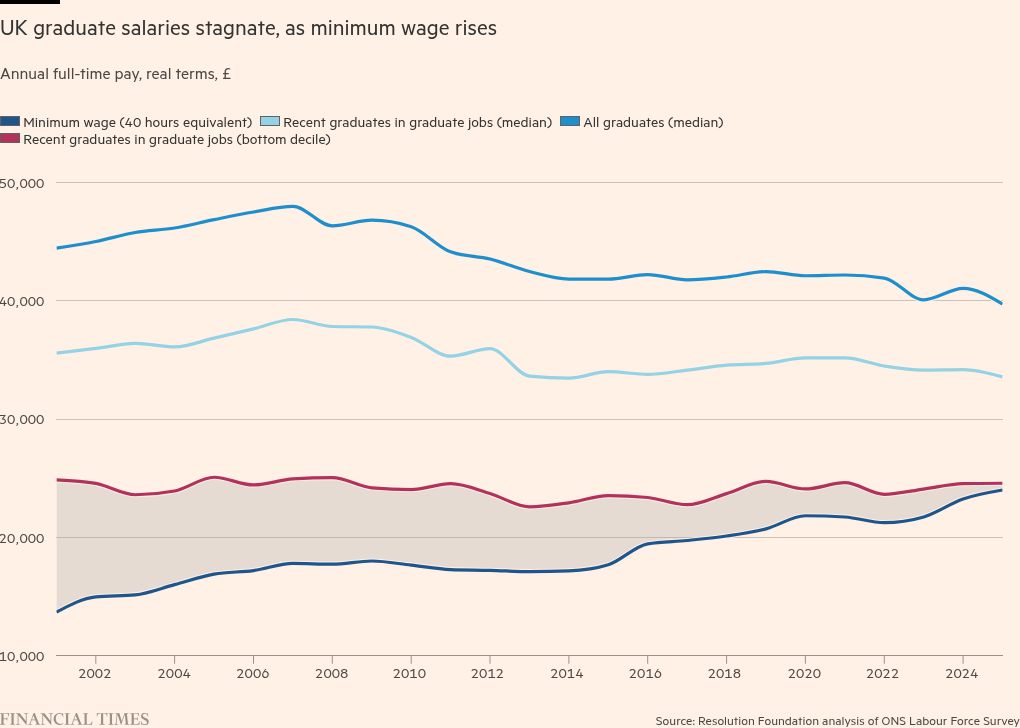
Meanwhile, many feel the returns on university education are weakening. The UK minimum wage is closing in on the pay earned by graduates, which has stagnated. The country’s graduate earnings premium has eroded while higher education has expanded, making it an international outlier, as my colleague John Burn-Murdoch recently showed.
Right now the most ambitious UK graduates, especially those in Science, Engineering, Technology and Maths (Stem) fields, are channelled into careers in the “Bermuda Triangle of talent” (finance, management consulting and corporate law). This happens, in part, because those jobs make the cost of living more manageable, but it starves the country of skills in innovative sectors.
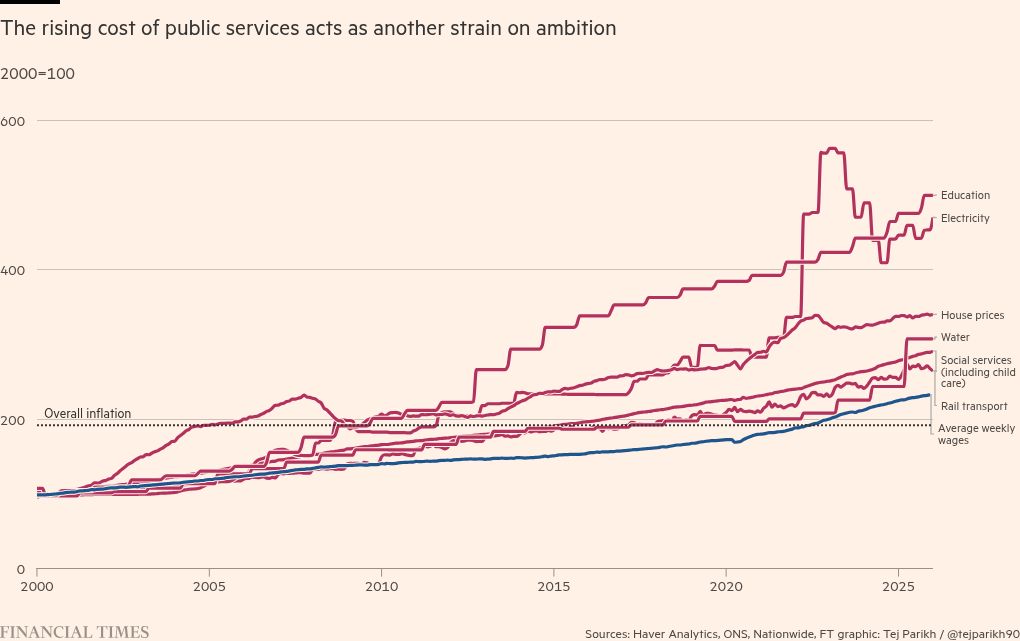
What explains this set-up? First, there has been a persistent failure to reform the tax system, build more homes and deliver improvements in public services.
A related problem is the inability of policymakers to boost Britain’s weak productivity growth, which would support higher wages and generate better fitting and better paying jobs for the well educated. (England ranks highest among rich nations for the share of workers overqualified for their roles.)
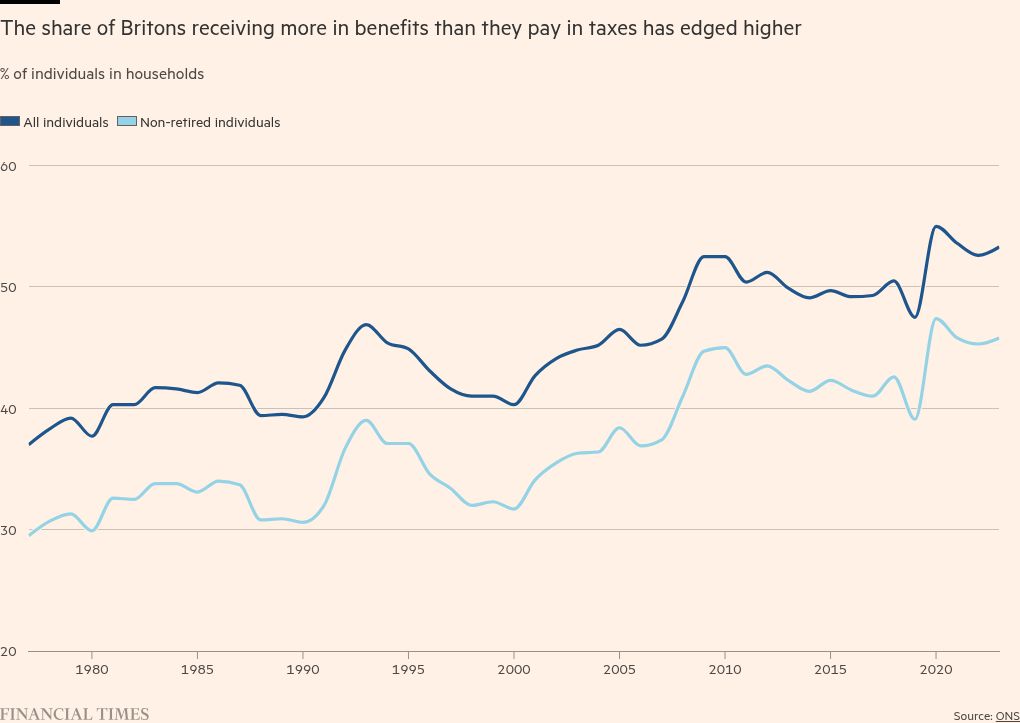
Then there is the rising burden of welfare costs. Sickness and ageing put greater demands on taxpayers, particularly when growth is wanting. The “triple lock” on state pensions — which ensures payments rise annually by the highest of inflation, average wage growth or 2.5 per cent — is particularly unsustainable. In recent years the proportion of UK adults who are net recipients of the state overtook the number of net contributors.
Cliff edges and limited reviews also mean the UK benefit system can discourage work and trap people in long-term support.
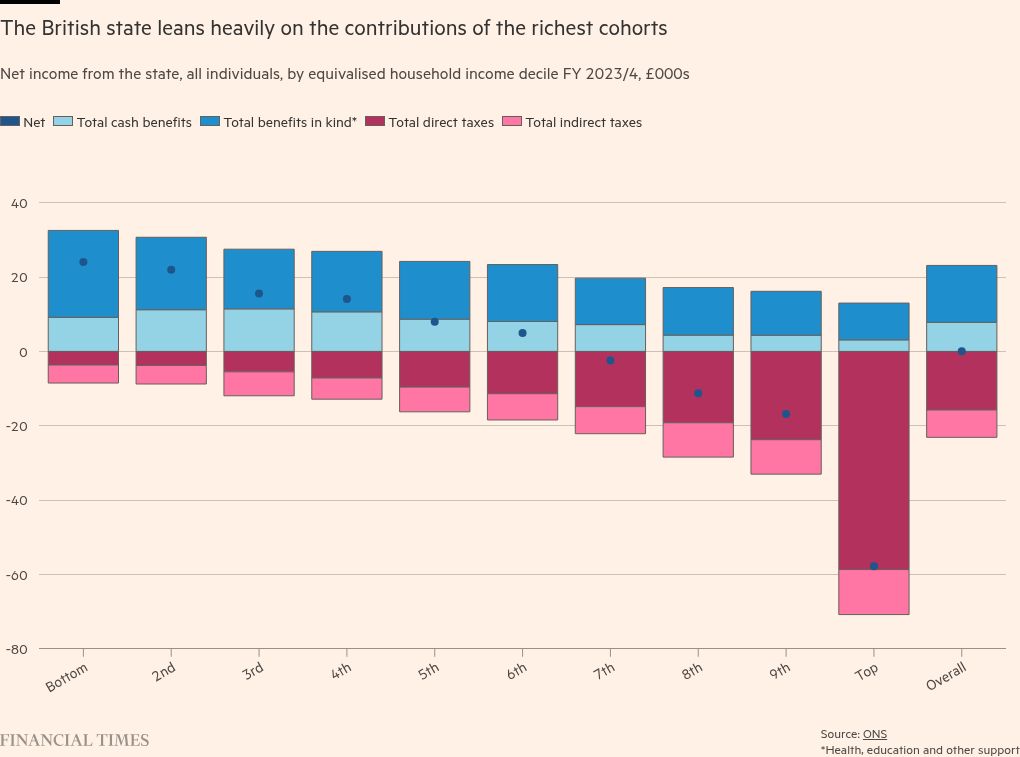
The state cannot squeeze bright graduates, workers and the rich forever. Other nations are proactively attracting the rich and highly skilled. Wealth managers have noted an uptick in the number of rich UK individuals keen to relocate, following recent tax grabs on non-doms, capital gains and mansions.
A 2025 poll by the Adam Smith Institute finds more than one in four Britons aged between 18 and 30 said they are planning to emigrate or are seriously considering it, with many citing housing and financial strains as drivers. A 2024 report by the British Council found nearly three-quarters of younger people would consider living and working abroad in the short or long term, with quality of life and job opportunities being key considerations.
Evidence of a significant outflow of talent is, so far, weak. Office for National Statistics data shows a net emigration of British people averaging about 100,000 on an annual basis since 2021, though much of the data is provisional.
Either way, with push factors outweighing the pull of the country, the UK risks a brain drain of its biggest contributors. Those who stay are increasingly accepting curbs on their aspirations.
Some will always question other people’s work ethic. But what Britain really lacks is a state that rewards it.
Send your thoughts to [email protected] or on X @tejparikh90.
Food for thought
The correlation between temperature and crime is well established. This paper digs further.
Free Lunch on Sunday is edited by Harvey Nriapia